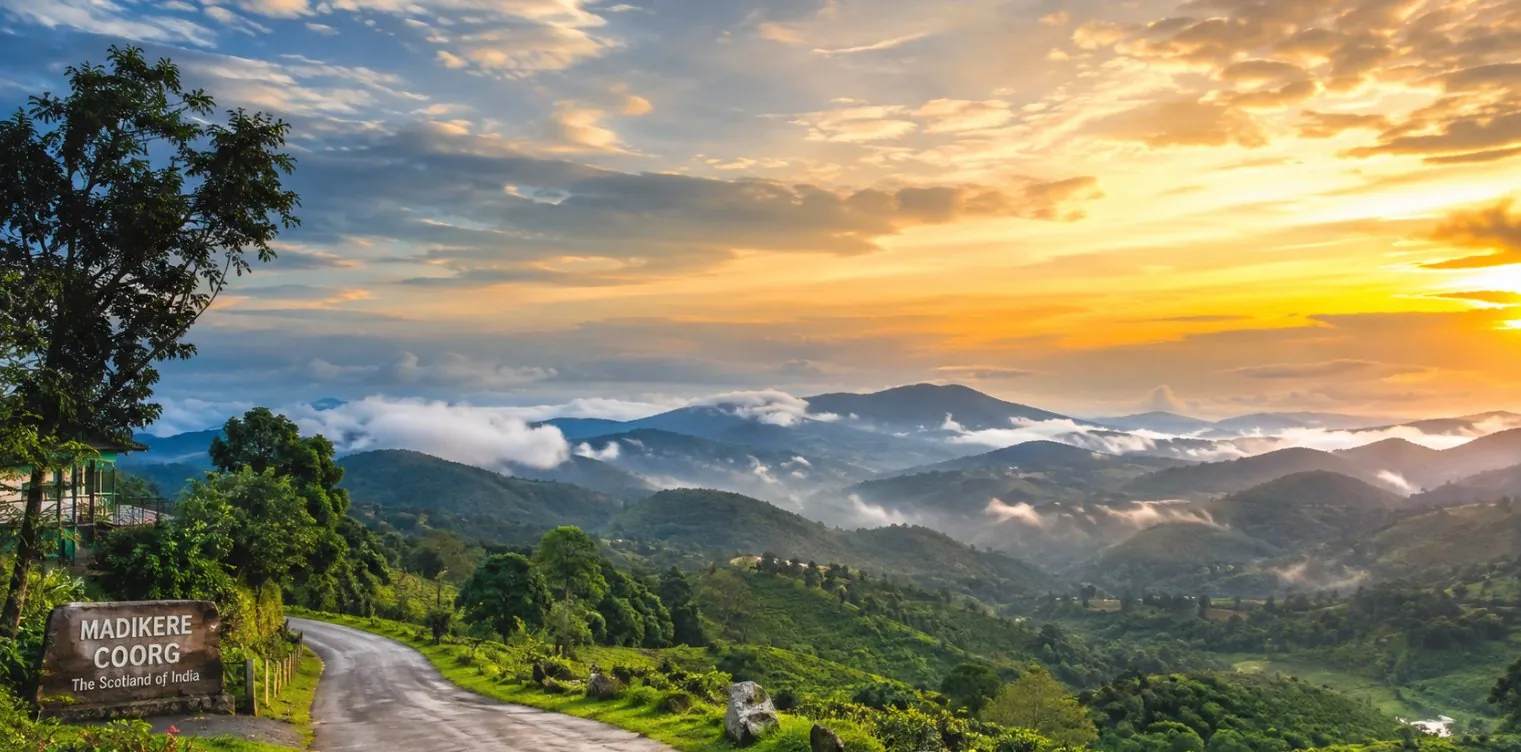

Coorg grows a large share of India's coffee, and once you know what you are looking at, the landscape stops being generic greenery and becomes quite specific and quite readable.
Arabica and robusta, and why both are here
Arabica grows higher, ripens slower, and gives you the sweeter, more acidic, more delicate cup. It is also more fragile — more susceptible to disease and more sensitive to heat. Robusta grows lower and hardier, yields more, and gives a heavier, more bitter, higher-caffeine cup that carries milk and sugar well.
Coorg grows both, which is why estates here look different from one another depending on elevation. What ends up in most Indian filter coffee is a blend, often with chicory.
Grown in the shade
The thing most visitors notice first is that the coffee is not planted in open fields. It sits under taller trees — often with pepper vines climbing them — which is how coffee grows naturally as a forest understorey plant.
That shade canopy is why the plantations here still support so much birdlife, and why an estate walk feels like a walk in woodland rather than through farmland. It also means most Coorg estates produce pepper and cardamom alongside the coffee, on the same land.
The year on an estate
- Blossom: a few days after the first pre-monsoon rain. The estates turn white and the scent is unmistakable.
- The monsoon: the cherries fill out through months of heavy rain.
- Harvest: roughly late November through February, picked by hand, in several passes as the cherries ripen unevenly.
- Processing and drying: follows the harvest, on open patios you will see from the road.
Buying some to take home
Buy whole beans rather than pre-ground if you have any way to grind them — ground coffee loses most of what makes single-estate coffee worth the premium within a couple of weeks. Ask whether the blend contains chicory; there is nothing wrong with chicory, but it is worth knowing. And ask for the roast date rather than the packing date.
The town market is generally better value than the roadside stalls on the tourist circuit, and the people there will tell you what estate it came from.
If you do one thing on a Coorg trip beyond the viewpoints, make it a guided estate walk. An hour of it will change how you drink coffee at home.