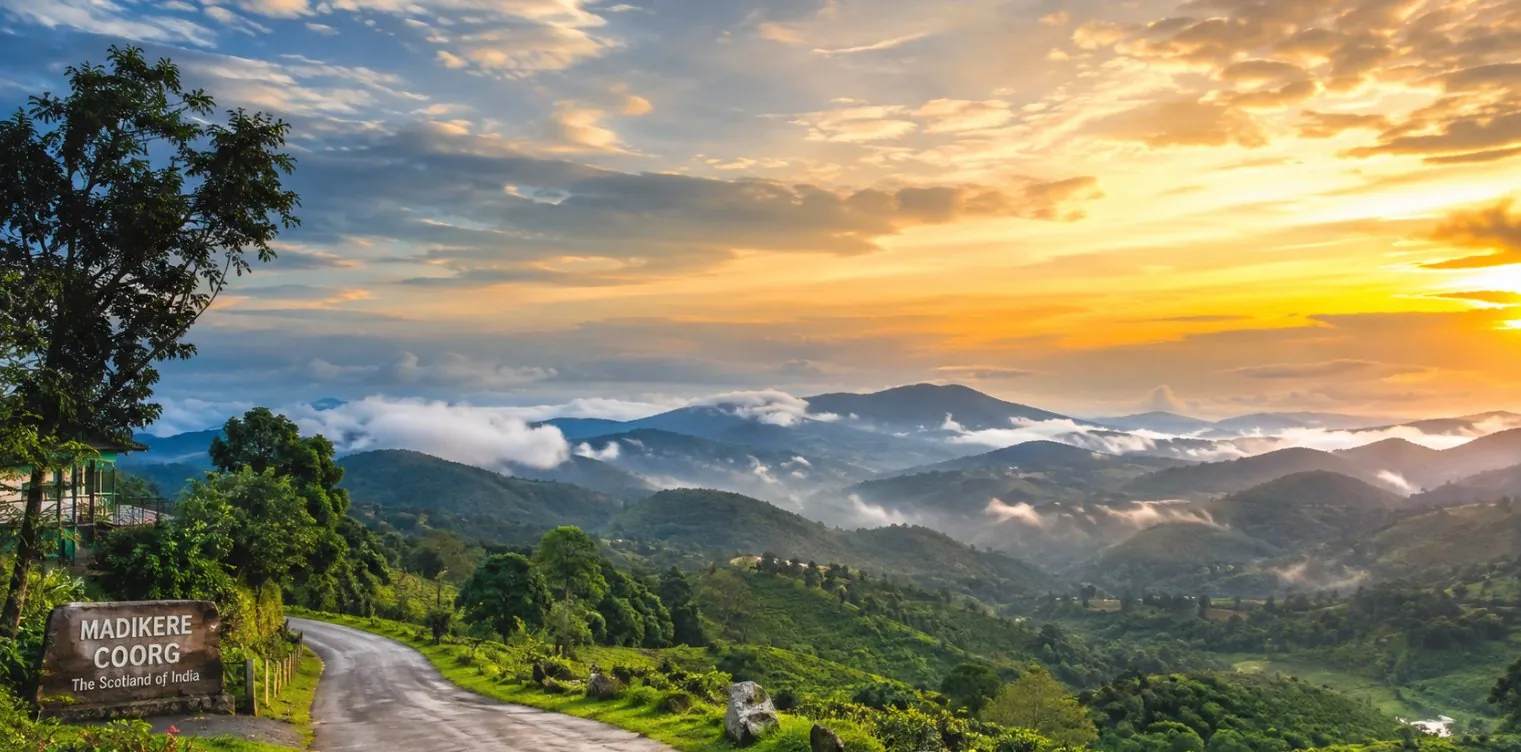

The Coorg monsoon is not a light inconvenience that interrupts an otherwise sunny holiday. It rains properly, sometimes for days without a real break. Understanding that before you book is the difference between a wonderful trip and a disappointed one.
What it is actually like
The hills disappear and reappear. Mist moves through at eye level. Waterfalls that are modest in March become genuinely loud. Everything is a deeper green than seems plausible, and the coffee plants are heavy with it.
It is also quiet. Roads are empty, viewpoints are empty, and the places that are packed in December have space to sit and stay a while.
What to pack
- An actual rain jacket, not an umbrella. Wind makes umbrellas useless here.
- Shoes with grip, and a second pair. Wet stone and red mud are slippery, and nothing dries quickly in this humidity.
- A dry bag or zip pouch for phone, camera and documents.
- One warm layer. It is not cold, but wet plus breeze at altitude gets chilly.
- Quick-dry clothing over denim, which stays wet for a day and a half.
Leeches, briefly
They exist on wet forest trails during these months. They are harmless and they are irritating. Long trousers tucked into socks handles most of it. Salt or a fingernail removes them; do not burn them off. Do not let this put you off walking — just know in advance so it is not a surprise on the trail.
Plan differently
Build a slower itinerary than you would in winter. Two outings a day rather than five. Assume at least one day is a write-off for driving, and treat it as a gift rather than a loss. Check road conditions locally before heading to the higher routes — heavy rain occasionally closes stretches, and that information is far more current on the ground than online.
Come in the monsoon if you want Coorg at its most dramatic and least crowded. Come between October and February if you want to be certain of the view. Both are the right answer to different questions.